
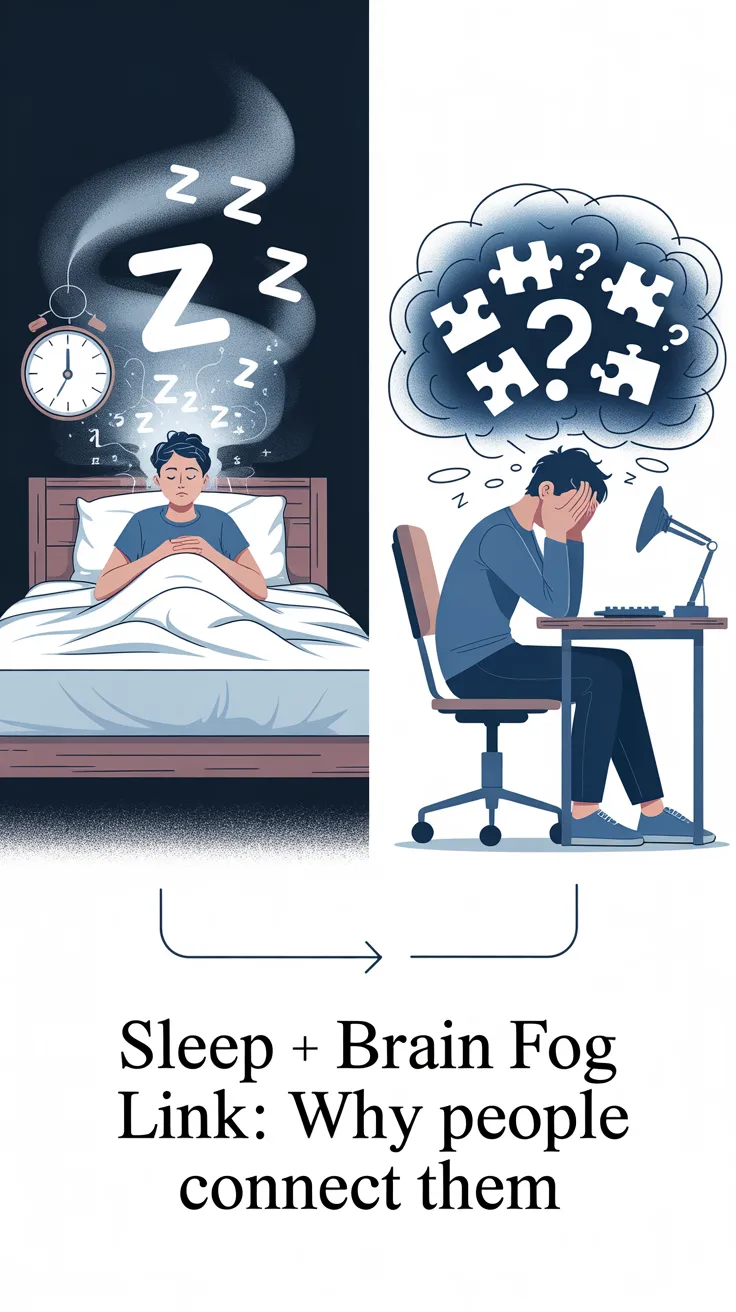
Brain fog is one of those frustrating experiences that’s hard to describe until you’ve lived it: slow thinking, forgetfulness, poor focus, and the sense that your mind is wading through mud. One reason the sleep + brain fog link comes up so often is simple—sleep is the brain’s primary reset button. When sleep quality drops (even if you’re technically “in bed” for 8 hours), mental clarity often drops with it.
The good news is that brain fog tied to sleep is usually approachable. You can improve it by understanding which aspect of sleep is off (duration, timing, depth, breathing, stress hormones, circadian rhythm) and matching the right interventions—habits first, then targeted support if needed.
Table of Contents
Understanding brain fog and why it feels so disruptive
Brain fog isn’t a formal medical diagnosis. It’s a symptom cluster that can include:
- Reduced attention span and distractibility
- Slower processing speed (“I read the same sentence three times”)
- Working memory problems (forgetting why you walked into a room)
- Word-finding difficulty (“It’s on the tip of my tongue”)
- Low motivation and mental fatigue
It can be mild and intermittent, or persistent enough to affect work and relationships. The “fog” feeling often involves several brain systems at once: attention networks, executive function, emotional regulation, and memory consolidation.
A key reason brain fog feels so upsetting is that it changes your sense of competence. Tasks you normally handle easily feel harder, and you may start questioning whether something deeper is wrong. That’s why the sleep connection matters: sleep disruption is one of the most common and reversible contributors to cognitive complaints.
The sleep + brain fog link: how sleep supports mental clarity
Sleep isn’t passive downtime. It’s active neurological maintenance. When sleep is short, fragmented, mistimed, or shallow, the brain has less opportunity to complete critical processes that support focus and clarity.
Memory consolidation and learning
During sleep—especially deeper stages and REM—your brain replays and strengthens neural patterns linked to new information. That’s why a good night’s sleep can make something you studied feel clearer the next day. When sleep is disrupted, that process becomes less efficient, showing up as forgetfulness and poor recall.
Brain waste clearance (“night shift” housekeeping)
During sleep, the brain increases clearance of metabolic byproducts through pathways often discussed in the context of the glymphatic system. When sleep is consistently low-quality, people often describe feeling mentally “toxic,” sluggish, or heavy—an experience that aligns with reduced restoration.
Neurotransmitter balance and attention control
Focus relies on well-regulated signaling (e.g., acetylcholine, dopamine, norepinephrine). Sleep disruption can tilt those systems toward reduced attention control and increased distraction. That can look like ADHD-like symptoms even in people who don’t have ADHD.
Emotional regulation and stress reactivity
Poor sleep increases emotional reactivity and reduces the “buffer” between a stressor and your response. Stress itself worsens brain fog, so this becomes a feedback loop: worse sleep → higher stress sensitivity → more fog → more worry → worse sleep.
Sleep quality vs. sleep quantity: why “8 hours in bed” can still mean brain fog
A common reason people connect sleep and brain fog is that they’re getting “enough” sleep on paper—yet waking up foggy. In many cases, the issue is quality rather than quantity.
Fragmentation and light sleep dominance
If you wake frequently (even briefly), your sleep architecture can skew lighter. You may not get enough consolidated deep sleep or REM. Common causes include:
- Stress and rumination
- Alcohol (often increases awakenings later at night)
- Overheating
- Noisy environment
- Late caffeine
- Blood sugar swings
- Sleep apnea or breathing disruptions
Circadian misalignment
You can sleep 7–9 hours at the “wrong” biological time and still feel off. Night shift work, late-night screens, inconsistent weekends, or late social schedules can shift circadian rhythm and reduce next-day clarity.
Sleep inertia
That groggy, foggy period after waking can be stronger if you wake from deep sleep or if you’re chronically sleep-deprived. It may also intensify if you hit snooze repeatedly (fragmenting the final sleep cycles) or wake in a dark room with low morning light exposure.
Common patterns that tie sleep problems to next-day brain fog
Not all sleep-related brain fog feels the same. Noticing your pattern can help you choose the most effective fix.
“I can’t fall asleep” fog (onset insomnia)
Often linked to racing thoughts, anxiety, late stimulant use, or unhelpful bedtime habits. The fog tends to feel like low bandwidth and irritability the next day.
“I wake at 3 a.m.” fog (maintenance insomnia)
This can be driven by stress hormones, alcohol, blood sugar dips, or environmental disruption. The next-day experience often includes poor concentration and low frustration tolerance.
“I sleep long but wake exhausted” fog
This pattern raises suspicion for sleep-disordered breathing, poor sleep efficiency, depression, certain medications, or inflammation. If you also snore, wake with dry mouth, or feel sleepy during the day, consider discussing sleep apnea screening with a clinician.
“Weekend catch-up doesn’t help” fog
When sleeping in shifts circadian rhythm, Monday can feel like jet lag—sometimes called social jet lag. The fog is often worse on the first workday after late weekends.
Sleep stages and why missing them changes cognition
Understanding sleep stages makes the sleep + brain fog link easier to grasp.
Deep sleep (slow-wave sleep)
This stage is strongly associated with physical restoration and certain memory processes. When deep sleep is reduced (stress, alcohol, aging, irregular schedules), people often describe:
- Heavy fatigue
- Less resilience to stress
- Weak mental stamina
REM sleep
REM supports emotional processing, creativity, and integration of memories. REM suppression (some medications, alcohol, fragmented sleep) can cause:
- Emotional volatility
- Reduced cognitive flexibility
- “Dull” thinking
Light sleep
Light sleep is normal and necessary, but if it dominates due to frequent awakenings, sleep can feel unrefreshing even if total time is adequate.
Lifestyle drivers that worsen sleep-related brain fog
Sometimes brain fog isn’t caused by sleep alone—but sleep amplifies other issues. Here are major contributors that often stack with sleep disruption.
Caffeine timing and dose
Late caffeine reduces sleep depth. Even if you fall asleep, your sleep can be lighter. A common strategy is a caffeine cutoff 8–10 hours before bed (some people need longer).
Alcohol’s “false sleep” effect
Alcohol can help you fall asleep faster but tends to fragment sleep later in the night and reduce REM. Many people notice sharper brain fog after “just a couple” drinks, especially as they get older.
Late-night screens and bright light
Blue-leaning light can suppress melatonin and delay sleep timing. Even if you’re tired, your brain may not transition smoothly into sleep.
Low daytime movement
Physical activity supports sleep depth and mood regulation. Lack of movement can make sleep lighter and increase restlessness.
High stress and nervous system activation
Stress isn’t just “in your head”—it changes cortisol and arousal systems. That’s why stress management isn’t optional if brain fog is strongly sleep-driven.
Targeted strategies to improve sleep and reduce brain fog
If your goal is clearer thinking, aim for sleep consistency + sleep depth + morning alertness. Here are practical, evidence-aligned tactics.
Build a consistent sleep schedule
Try to keep wake time consistent within about an hour (even on weekends). A stable wake time is often more powerful than a strict bedtime.
Morning light exposure
Get 5–15 minutes of outdoor light shortly after waking. Bright morning light anchors circadian rhythm and can reduce sleep inertia over time.
Create a “power-down” routine
A 30–60 minute wind-down helps your nervous system shift into sleep mode:
- Lower lights
- Calm music or reading
- Warm shower
- Simple breathing practice
- Write tomorrow’s top 3 tasks (reduces rumination)
Optimize the sleep environment
- Cooler room (many people do best around 60–67°F / 15–19°C)
- Dark room (blackout curtains if needed)
- Low noise (white noise if helpful)
- Comfortable bedding
Be smart about naps
If you’re foggy, naps can help—but long or late naps can worsen night sleep. Consider 10–25 minutes earlier in the day.
Support steady blood sugar at night (for some people)
If you wake at the same time nightly, experiment with balanced dinner timing and composition. Some people find they sleep more consistently when dinner includes protein, fiber, and healthy fats rather than a high-sugar evening snack.
When supplements enter the conversation (and how to use them responsibly)
Many people looking into the sleep + brain fog link start exploring supplements. A reasonable approach is:
- Start with sleep hygiene and schedule
- Address obvious disruptors (alcohol, caffeine, late screens, stress)
- Consider targeted support when foundational steps aren’t enough
If you’re exploring wellness products, it’s important to keep expectations realistic: supplements are not a substitute for diagnosing sleep apnea, addressing medication side effects, or treating depression/anxiety.
Support tools some people consider for sleep-related clarity
Many professionals rely on tools like NeuroPrime to support cognitive performance routines when mental clarity feels inconsistent—especially when paired with foundational sleep improvements like consistent wake times and reduced late-night light exposure.
Struggling with groggy mornings and “foggy” thinking after restless nights? Some people look into solutions like Pineal Guardian X as part of a broader sleep-support routine, particularly when they’re focused on building a more stable bedtime rhythm and nighttime recovery.
Expert quote format:
“As many sleep researchers emphasize, consistent routines matter most; tools like NeuroPrime are best viewed as supportive additions alongside schedule consistency, morning light, and stress reduction.”
(As with any supplement, check with a qualified clinician if you’re pregnant, nursing, taking medications, or managing a medical condition.)
Tools & resources that fit a sleep-to-clarity plan
Use these as optional supports—not replacements for sleep fundamentals.
💡 Recommended Solution: NeuroPrime
Best for: Supporting a clearer daytime focus routine while improving sleep consistency
Why it works:
- Helps reinforce a “clarity stack” alongside morning light and hydration
- Useful for professionals who need stable attention and mental stamina
- Works best when sleep duration and timing are already being stabilized
💡 Recommended Solution: Pineal Guardian X
Best for: People prioritizing nighttime recovery habits to reduce next-day fog
Why it works:
- Supports a wind-down routine when paired with lower evening light exposure
- Encourages consistency around bedtime behavior
- Complements stress-lowering practices like reading and breathwork
Comparison / alternative angle:
While many people focus solely on productivity hacks for brain fog, sleep-first routines—sometimes paired with supportive options like **Pineal Guardian X**—tend to be more sustainable than relying on stimulants or late-day caffeine that can sabotage sleep.
When to consider testing or medical support
Because brain fog has many inputs, you’ll want extra evaluation if you have red flags or persistent symptoms.
Consider discussing with a clinician if you have:
- Loud snoring, choking/gasping at night, or witnessed pauses in breathing
- Severe daytime sleepiness or falling asleep unintentionally
- Persistent brain fog > 6–8 weeks despite strong sleep improvements
- New or worsening depression/anxiety
- Thyroid symptoms, anemia symptoms, or unexplained weight changes
- Neurological symptoms (weakness, severe headaches, confusion episodes)
Sleep apnea is a major one: it’s common, underdiagnosed, and strongly tied to cognitive complaints. Treating it can significantly improve mental clarity for many people.
A practical 14-day reset plan for sleep-related brain fog
If you want a straightforward experiment, try this for two weeks:
Days 1–3: Stabilize the basics
- Fix a wake time (daily)
- Get morning outdoor light
- Cut caffeine earlier than usual
- Keep the bedroom cool and dark
Days 4–7: Reduce nighttime disruption
- 60-minute wind-down (dim lights, no work)
- No alcohol on weeknights (test impact)
- Gentle movement most days (walk counts)
Days 8–14: Personalize and track
- Track: bedtime, wake time, awakenings, energy, brain fog (1–10)
- Adjust dinner timing if you wake at consistent times
- Consider a supportive tool in your routine if fundamentals are in place
Case study / example style (general):
For instance, many people who implement a consistent wake time plus morning light exposure report noticeably reduced “morning fog” within 7–14 days, even before making major dietary changes—because circadian rhythm stabilizes and sleep becomes more consolidated.
Conclusion
The sleep + brain fog link: why people connect them comes down to how deeply sleep supports memory, attention, emotional regulation, and neurological recovery. If your sleep is short, fragmented, mistimed, or disrupted by breathing issues, it’s completely plausible to feel mentally cloudy—even if you’re doing everything else “right.”
Start with the high-leverage basics: consistent wake time, morning light, reduced late caffeine and alcohol, a real wind-down routine, and an optimized sleep environment. If you want extra support, consider tools that complement—rather than replace—strong sleep habits, such as NeuroPrime for daytime clarity routines or Pineal Guardian X as part of a nighttime consistency plan. And if fog persists or you have red flags like snoring and daytime sleepiness, prioritize medical evaluation—because treating the root cause is what truly restores clarity.
FAQ
How does sleep deprivation cause brain fog?
Sleep deprivation reduces memory consolidation, disrupts attention networks, and increases stress reactivity. Even one short night can impair focus, but chronic short or fragmented sleep typically causes the most persistent brain fog.
Can you have brain fog even with 8 hours of sleep?
Yes. If sleep is fragmented (frequent awakenings), low in deep/REM sleep, or misaligned with your circadian rhythm, you can still wake up foggy despite adequate time in bed.
How long does it take to clear brain fog after fixing sleep?
Many people notice improvements within 7–14 days of consistent wake times, morning light, and reduced late-night disruptors. More significant recovery can take several weeks, especially if sleep debt has built up or stress is high.
What supplements help with the sleep + brain fog link?
It depends on the cause. Some people explore supportive options as part of a broader routine. If you’re combining sleep habit changes with wellness tools, consider approaches like Pineal Guardian X for nighttime routine support or NeuroPrime to support daytime clarity—while keeping expectations realistic and checking with a clinician when appropriate.
When should I worry that brain fog is something more serious?
Seek medical input if brain fog is persistent despite good sleep, is worsening, or comes with symptoms like severe daytime sleepiness, snoring/gasping at night (possible sleep apnea), neurological changes, or significant mood changes.