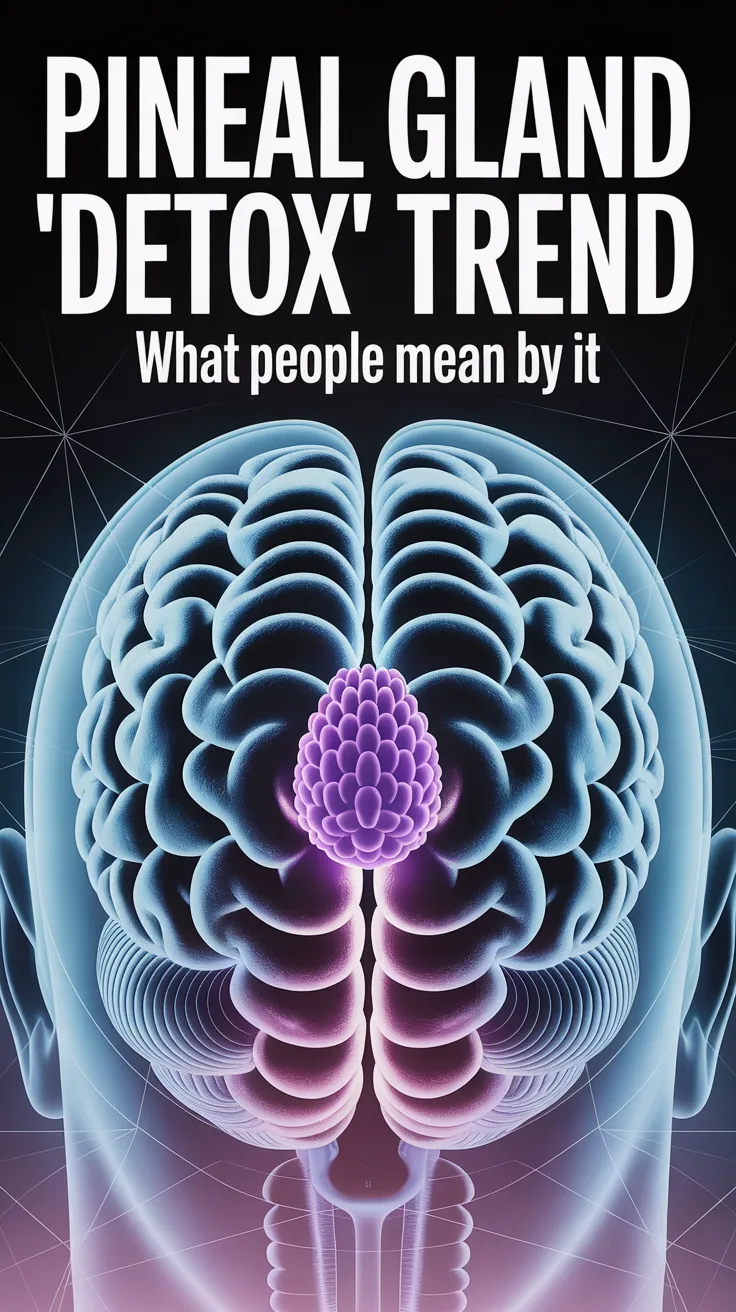
The Pineal Gland “Detox” Trend: What People Mean by It has surged across wellness blogs, TikTok, and supplement ads—often wrapped in big promises about “decacifying” the pineal gland, boosting intuition, and improving sleep. But when people say “pineal detox,” they’re usually blending several ideas together: concerns about fluoride exposure, interest in melatonin and circadian rhythm, frustration with brain fog, and a desire for a simple protocol that feels empowering.
It’s also a topic where misinformation spreads fast. Some claims are rooted in real anatomy and physiology (the pineal gland does help regulate sleep via melatonin), while others make leaps that aren’t supported by strong evidence (like “toxins stored in the pineal gland” being the cause of most modern health problems). This guide explains what the trend typically means, what science actually says, what’s plausible vs. hype, and how to approach the topic safely—without fear-based marketing.
Many professionals who are interested in evidence-informed wellness also use targeted tools and supplements to support sleep quality and mental clarity. If you’re looking for a structured option people commonly explore in this space, you may see products like Pineal Guardian X mentioned alongside lifestyle fundamentals like consistent sleep schedules, morning light, and stress regulation.
Table of Contents
Understanding the pineal gland and why it became a “detox” target
The pineal gland is a small endocrine gland near the center of the brain. Its most widely accepted role is helping regulate circadian rhythm by secreting melatonin, especially in response to darkness. Melatonin supports sleep timing and may influence other rhythms tied to metabolism, immune signaling, and hormonal cycles.
So why is the pineal gland suddenly the star of a “detox” trend?
The real physiology behind the fascination
A few legitimate factors make the pineal gland easy to romanticize:
- It’s brain-adjacent and mysterious: Any structure in the brain feels important and symbolic.
- It’s linked to sleep: Sleep is foundational. When sleep is poor, everything feels off—mood, cognition, cravings, energy, and resilience.
- Melatonin is familiar: Many people already supplement melatonin or have read about it, so it feels approachable.
- Calcification is a real phenomenon: Imaging studies show that many adults develop degrees of pineal calcification—deposits that are often associated with aging.
Where the concept gets stretched
Online “pineal detox” narratives often merge separate ideas into one storyline:
- Fluoride + calcification
- “Third eye” spirituality + intuition
- Heavy metals + brain fog
- Supplements + “decacification” promises
This mashup can sound compelling, but it’s important to separate what’s biologically plausible (supporting circadian rhythm, reducing sleep disruptors) from what’s unproven (claims of dramatic “toxin release” from the pineal gland).
What people mean by “pineal detox” in wellness culture
In everyday use, “pineal detox” rarely means a medically defined detoxification process. Instead, it usually refers to a bundle of goals and practices that fall into a few categories.
Supporting “clearer thinking” and less brain fog
One of the biggest drivers behind the trend is brain fog—a common, non-specific symptom that can be linked to poor sleep, chronic stress, inflammation, medication side effects, under-fueling, hormonal shifts, or mental overload. “Pineal detox” becomes shorthand for wanting to feel mentally sharp again.
Optimizing melatonin and sleep timing
Many “detox” protocols emphasize behaviors that—intentionally or not—line up with circadian biology:
- Reducing nighttime light exposure
- Avoiding late caffeine and alcohol
- Getting morning sunlight
- Establishing a consistent bedtime routine
These aren’t “detox” in a strict sense, but they can meaningfully affect sleep quality.
Reducing perceived environmental burdens
People may use “detox” to mean reducing inputs they worry about:
- Fluoridated water
- Ultra-processed foods
- Household chemicals
- Heavy metal exposure
Whether or not these are the main drivers of their symptoms, the underlying desire is understandable: regain a sense of control.
“Third eye” or spiritual awakening framing
Some of the trend isn’t about biology at all. It’s spiritual language applied to a physical gland—ideas about intuition, vivid dreams, and meditation experiences. That can be meaningful as a personal framework, but it shouldn’t be confused with established medical claims.
Pineal gland “calcification,” fluoride, and what evidence can (and can’t) show
A core term in the trend is pineal calcification. Calcification commonly increases with age, and it’s visible on imaging. The controversy comes from what causes it—and what it means.
What calcification might indicate
Calcification is generally considered a marker of aging in various tissues. In the pineal gland, some research has explored links between calcification and:
- Reduced melatonin secretion
- Sleep disturbances
- Changes in circadian rhythm
However, this is not a simple cause-and-effect story. People with calcification can still sleep well, and sleep problems can occur without notable calcification. The relationship is likely influenced by many variables: light exposure habits, stress physiology, health conditions, and individual sensitivity.
Fluoride and the pineal gland: nuanced, not binary
Fluoride is a lightning-rod topic. Some studies have explored fluoride accumulation in calcified tissues, and the pineal gland can contain mineral deposits. But translating that into “fluoride is calcifying your pineal gland and ruining your life” is a much bigger claim than the evidence supports.
A balanced view:
- It’s reasonable to reduce unnecessary exposures if it gives you peace of mind, especially if you can do so safely (e.g., water filtration choices).
- It’s not reasonable to assume fluoride is the primary cause of sleep problems or to pursue extreme protocols without evidence.
- It’s best to focus on high-impact, proven sleep and circadian strategies first.
The “detox” misconception
The body’s main detox systems are the liver, kidneys, lungs, skin, and gastrointestinal tract. There isn’t a recognized process where the pineal gland “flushes toxins” in response to lemon water, supplements, or fasting. Most “detox” claims are really about reducing stressors and supporting normal physiology, not removing a specific substance from a specific gland.
Practical, evidence-aligned ways to support sleep and circadian rhythm
If you translate “pineal detox” into something measurable, it’s usually better sleep quality, better sleep timing, and clearer daytime cognition. The most reliable path is to support circadian rhythm and reduce sleep disruptors.
Light: the most underrated sleep lever
Light is a primary driver of your internal clock.
- Morning light (10–30 minutes) soon after waking supports circadian alignment and daytime alertness.
- Dim evenings help signal melatonin onset.
- Reduce bright indoor light and screens close to bedtime when possible. If screens are unavoidable, use night-mode settings and keep brightness low.
Caffeine, alcohol, and timing
- Caffeine can linger longer than people expect. Consider a cutoff 8–10 hours before bedtime if sleep is fragile.
- Alcohol may make you sleepy initially but tends to fragment sleep later in the night.
Consistent sleep schedule
A stable wake time often matters more than a perfect bedtime. Anchoring your wake time helps regulate the entire rhythm.
Stress regulation and nervous system downshifting
If your “pineal detox” interest is really about racing thoughts, nighttime anxiety, or shallow sleep, focus on decompression:
- 5–10 minutes of slow breathing
- Warm shower/bath
- Journaling or a simple “brain dump”
- Gentle stretching
Nutrients and foundational health
Sleep is influenced by overall health: blood sugar stability, sufficient protein, micronutrients, and movement. Instead of chasing “detox hacks,” many people see more improvement from basics done consistently for 3–6 weeks.
Problem-Solution Bridge: Struggling with inconsistent sleep, mental fatigue, or feeling “wired at night”? Many people look for structured support that pairs lifestyle with gentle supplementation. Tools like Pineal Guardian X are often explored for general nighttime and clarity support as part of a broader routine—especially when the goal is consistency rather than “overnight transformation.”
Supplements and “pineal detox” formulas: how to evaluate claims safely
Supplements are a major part of the pineal detox trend. The challenge is that marketing language often goes far beyond what can be responsibly claimed.
A safe framework for evaluating products
When a product is framed as a pineal “detox” or “decalcification” support, evaluate it like this:
- Does it avoid extreme promises? Be cautious with claims like “remove fluoride,” “reverse calcification,” or “activate the third eye.”
- Does it fit your goal? If your goal is sleep quality, does it align with a bedtime routine and circadian habits?
- Does it encourage fundamentals? The best approaches don’t pretend supplements replace sleep hygiene.
- Does it use vague fear triggers? “Toxins everywhere” with no specifics is often a sales tactic.
- Is your situation more complex? If you snore, wake gasping, have restless legs, depression, or significant anxiety—consider professional evaluation.
Where a supplement may fit
Some people choose supplements to support:
- Relaxation and stress response
- Sleep onset and sleep maintenance
- Recovery after travel or shift-work disruptions
- A consistent pre-bed ritual (which itself can be beneficial)
💡 Recommended Solution: Pineal Guardian X
Best for: People who want a simple supplement companion to a sleep/circadian routine
Why it works (in a practical sense):
- Helps many users stay consistent with a nightly wind-down plan
- Can be paired with light management and stress-reduction habits
- Offers a “one-system” approach for those who don’t want to stack many products
Note: Since you didn’t provide formula details, interpret this as a general-use positioning rather than a statement about specific ingredients or outcomes.
Comparison-style reality check
While some “detox” protocols focus on aggressive cleanses, restrictive fasting, or expensive testing, a more sustainable alternative is a steady routine plus a single supportive tool. In that sense, Pineal Guardian X can be viewed as an alternative for people who want a lower-complexity approach—without building their entire plan around unverified “decalcification” claims.
The spiritual and “third eye” layer: meaning vs. medical claims
A lot of the pineal detox conversation is intertwined with spirituality: meditation, vivid dreams, lucid dreaming, intuition, and the “third eye” concept. It’s worth treating this respectfully while also staying clear about what is and isn’t medical science.
Why the symbolism resonates
- People want deeper meaning and a sense of inner guidance.
- Meditation and breathwork can change subjective experience dramatically.
- Better sleep can increase dreaming and dream recall—making experiences feel profound and “new.”
Keeping it grounded
You can explore spiritual practices without turning them into health claims. Meditation, yoga nidra, breathwork, and journaling can be valuable—especially when framed as nervous system regulation and self-awareness practices.
If someone claims a supplement “opens your third eye” or “activates dormant brain centers,” treat it as metaphorical at best unless supported by credible evidence.
Expert Quote Format:
“As many sleep clinicians emphasize, the most powerful lever for improving melatonin rhythm is not a ‘detox’—it’s consistent light exposure and sleep timing. Supplements can support routines, but they rarely replace circadian basics.” In practice, some people use a structured product like Pineal Guardian X as a routine anchor while they prioritize morning light, reduced late-night brightness, and stress downshifting.
(This quote reflects a consensus-style principle common in sleep medicine education; it’s not attributed to a specific named clinician.)
Building a “pineal detox” routine that’s realistic and low-risk
If you want to engage with the trend without falling into fear-based tactics, build a plan that is:
- measurable (sleep latency, wake-ups, energy)
- consistent (2–6 weeks)
- non-extreme (no harsh protocols)
- adaptable (based on your results)
A practical 14–30 day routine (behavior-first)
Morning
- Get outdoor light soon after waking
- Hydrate and eat a balanced breakfast if it helps stabilize energy
- Move for 5–20 minutes (walk, mobility, light exercise)
Daytime
- Keep caffeine earlier
- Get a second dose of outdoor light if possible
- Avoid long late-afternoon naps if sleep is sensitive
Evening
- Dim lights 1–2 hours before bed
- Keep the bedroom cool and dark
- Use a “same sequence” wind-down ritual (shower, reading, stretch, breathing)
Night
- If you can’t sleep after ~20–30 minutes, consider a low-stimulation reset (dim light, calm activity) rather than forcing it in bed
Where a product can fit (optional)
If you want a supplement as part of your routine, use it consistently and track outcomes. For example, you might tie it to the start of your wind-down.
Contextual Inline Mention: Many professionals rely on tools like Pineal Guardian X to streamline their evening routine—mainly because having a consistent “cue” can make it easier to stick with the behaviors that actually drive circadian alignment.
A simple tracking method
Track these for 2–3 weeks:
- Time to fall asleep
- Number of awakenings
- Wake time consistency
- Morning energy (1–10)
- Afternoon crash intensity (1–10)
If there’s no improvement, consider that the bottleneck may not be “pineal health” at all. Common culprits include sleep apnea, chronic stress, depression, iron deficiency, thyroid issues, medication effects, or inconsistent schedules.
Common myths and red flags in the pineal gland “detox” trend
To stay safe and informed, watch for these patterns.
Myth: “Detox symptoms prove it’s working”
Headaches, fatigue, nausea, and dizziness are not reliable evidence of detoxification. They can signal dehydration, electrolyte imbalance, caffeine withdrawal, under-eating, or anxiety.
Myth: “One ingredient reverses calcification”
Be skeptical of any single-ingredient hero claim—especially when it’s framed as rapid “decalcification.”
Myth: “All brain fog is pineal-related”
Brain fog is multi-factorial and often sleep-related, stress-related, nutrition-related, or medical. When people feel better after starting a “detox,” it’s frequently because they:
- improved sleep timing
- reduced alcohol
- ate more whole foods
- drank more water
- got more sunlight
- reduced stress
Those are wins—but they’re not proof of pineal “cleansing.”
Red flags
- Claims that medical care is unnecessary
- Encouraging you to stop prescribed meds
- Extreme water fasting without supervision
- Selling fear first, offering a “solution” second
If your sleep problems are persistent, severe, or paired with loud snoring, gasping, or daytime sleepiness, consider evaluation for sleep apnea—one of the most underdiagnosed causes of fatigue and brain fog.
Conclusion
The Pineal Gland “Detox” Trend: What People Mean by It is less about a literal detox process and more about a modern search for better sleep, clearer thinking, and a sense of inner balance. The pineal gland does matter—primarily through melatonin and circadian rhythm—but the most dependable “detox” approach is a calm, consistent, evidence-aligned routine: morning light, dim evenings, stable sleep schedules, stress downshifting, and realistic expectations.
If you want an optional supplement to support your routine, consider using a single, structured tool rather than stacking a dozen products or chasing extreme protocols. Some people explore options like Pineal Guardian X as a general companion to sleep and clarity habits—while keeping the core focus on behaviors that reliably shape circadian rhythm.
FAQ
What is the pineal gland “detox” trend really about?
Most people use the term to describe improving sleep, reducing brain fog, and minimizing exposures they worry about (like fluoride), rather than a medically defined detoxification process.
Can the pineal gland actually detox or “flush toxins”?
There’s no established scientific model where the pineal gland detoxes like the liver or kidneys. What people often experience as “detox results” is usually better circadian alignment, improved sleep hygiene, and reduced lifestyle stressors.
Does fluoride calcify the pineal gland?
Pineal calcification is real and tends to increase with age. Fluoride discussions are complex, but strong claims that fluoride is the primary cause of calcification or sleep problems are not well-supported. If you’re concerned, focus first on proven sleep and light habits.
What are safer alternatives to extreme pineal detox protocols?
A low-risk approach includes morning sunlight, dim evenings, consistent sleep timing, limiting late caffeine/alcohol, stress reduction, and tracking sleep metrics for 2–3 weeks.
Do pineal “detox” supplements work?
Some people find supplements helpful as part of a consistent nighttime routine, especially for relaxation and sleep support. If you’re considering one, keep expectations realistic, avoid fear-based claims, and use it alongside circadian fundamentals. If you want a structured option people commonly explore in this niche, Pineal Guardian X is one example often paired with lifestyle basics.