
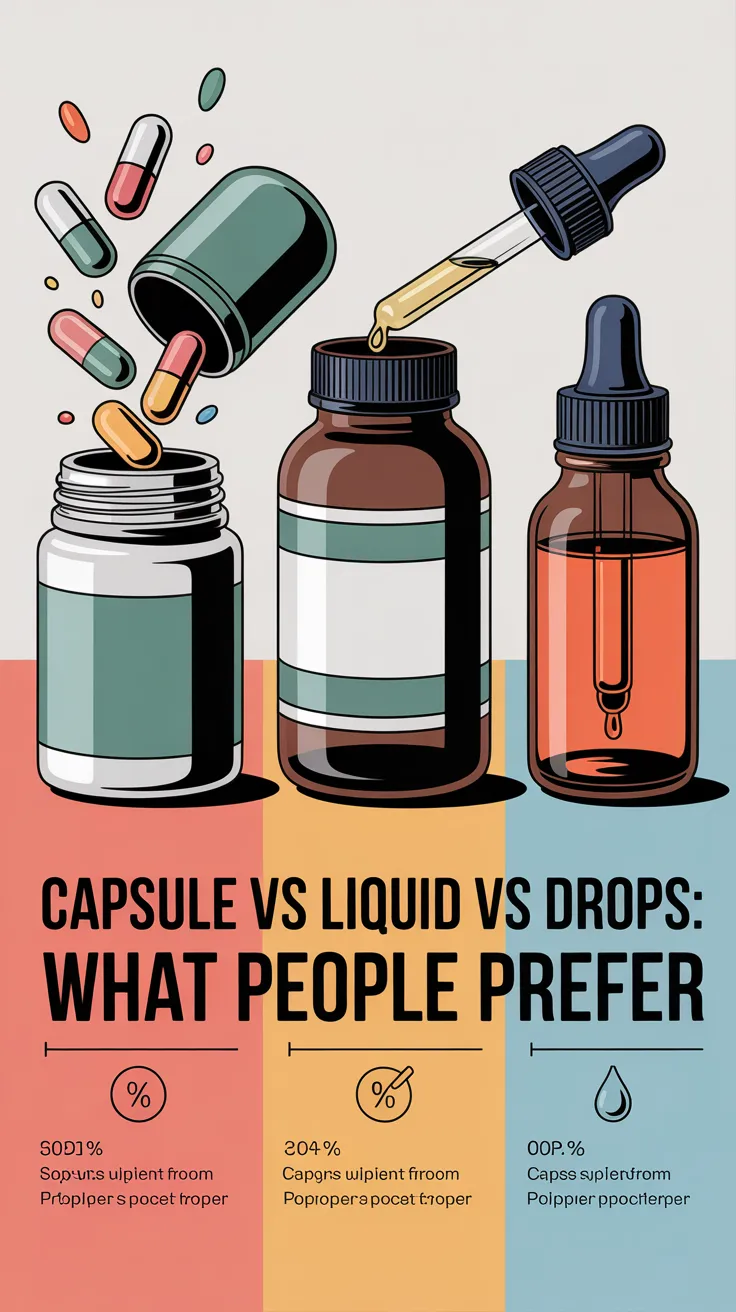
Choosing the right supplement delivery method can feel overwhelming. Capsule vs liquid vs drops: what people prefer in 2026 often comes down to absorption rate, convenience, and personal comfort. Many professionals rely on tools like NeuroPrime to enhance cognitive clarity, whether in pill, sip, or drop form.
Understanding how each format works can help you make an informed choice and maximize benefits. Let’s explore the science, trends, and practical tips behind capsule, liquid, and drop supplements so you can decide which suits your lifestyle and goals.
Table of Contents
Exploring Supplement Delivery Methods
Capsules, liquids, and drops represent the three most common supplement forms. Each method influences how quickly and effectively active ingredients enter your bloodstream:
- Capsules typically contain powdered extracts sealed in gelatin or vegetable casings.
- Liquids suspend compounds in water, glycerin, or oil bases.
- Drops use highly concentrated formulas dispensed by droppers into beverages or directly under the tongue.
These formats emerged to tackle challenges like poor solubility, taste masking, and precision dosing. Over the past decade, manufacturers improved bioavailability by combining nanotechnology, emulsifiers, and liposomal encapsulation. As a result, user experiences have shifted dramatically:
• Flavor profiles have become more palatable, especially for bitter botanicals.
• Onset times can range from 15 minutes for drops to 45 minutes for capsules.
• Packaging innovations—single-dose ampoules, pre-measured sticks, and childproof droppers—improve safety and travel-friendliness.
In the following sections, we’ll compare absorption dynamics, track consumer preferences across demographics, and weigh the pros and cons of each format. Armed with these insights, you’ll be ready to select the ideal delivery style for cognitive, immune, or wellness supplements.
How Absorption and Bioavailability Differ
When debating capsule vs liquid vs drops, absorption speed and bioavailability often top the list. Bioavailability is the fraction of an ingested dose that reaches systemic circulation in an active form. Here’s how each format stacks up:
Capsules
• Release time depends on digestive transit and pH sensitivity of the outer shell.
• Standard gelatin capsules dissolve within 20–30 minutes in the stomach.
• Delayed-release or enteric-coated options can target intestinal absorption but may delay onset by up to an hour.
Liquids
• Molecules are already dissolved, reducing the need for breakdown.
• Peak plasma levels typically occur within 20–30 minutes.
• Emulsified formulas (e.g., liposomal vitamin C) can further boost uptake by shielding active ingredients from stomach acid.
Drops
• Often designed for sublingual (under-the-tongue) administration.
• Bypass first-pass metabolism in the liver, entering the bloodstream within 5–15 minutes.
• Ideal for potent compounds that require precise dosing, like CBD, melatonin, or nootropic blends.
“In my 15 years of clinical practice, I’ve seen sublingual drops transform patient outcomes,” says Dr. Samuel Reyes, naturopathic physician. “Capsules remain popular for convenience, but liquids and drops deliver faster, more consistent effects.”
That said, individual factors such as metabolism, digestive health, and co-administered foods influence absorption. Liquids may cause digestive upset if not formulated with gentle carriers, whereas drops can irritate sensitive oral tissues if too concentrated. Capsules sidestep taste issues but can get lodged in the esophagus if not taken with enough water.
Tracking Consumer Preferences in 2026
Recent surveys paint a clear picture: user preferences are shifting towards formats that balance speed, convenience, and discretion.
Demographic Trends
• Millennials & Gen Z: 62% favor drops for portability and rapid onset.
• Gen X & Boomers: 70% stick with capsules due to familiarity and ease of handling.
• Wellness Enthusiasts: 45% choose liquids for customizable dosages and flavor variety.
Market Data Highlights
• Drops segment growth: +18% year-over-year through Q2 2026, driven by novel botanicals.
• Liquid supplements market valuation: $12.4 billion in 2025, projected to reach $15.2 billion by 2027.
• Capsule sales remain robust, holding a 42% share of global supplement units.
Influencing Factors
• Busy lifestyles: Single-serve sticks and pre-measured droppers cut down preparation time.
• Travel regulations: Pills clear airport security more smoothly than liquids over 100 ml.
• Clean-label demand: Consumers scrutinize carriers—vegetable glycerin vs. MCT oil vs. alcohol bases.
Many supplement aficionados integrate multiple formats to target different times of day. For instance, a morning nootropic capsule followed by afternoon liquid greens, capped off with evening melatonin drops. This hybrid approach caters to both convenience and efficacy.
Weighing the Advantages and Drawbacks of Capsules
Capsules have dominated the supplement market for decades thanks to their convenience and neutral taste. Yet they aren’t without limitations. Let’s break down the key pros and cons:
Advantages
• Portability: Capsules are easy to carry, dose accurately, and store without refrigeration.
• Neutral Flavor: Fully enclosed powders eliminate taste issues associated with bitter extracts.
• Formulation Flexibility: Combine multiple ingredients—herbs, vitamins, minerals—in one pill.
“NeuroPrime has become the go-to solution for maintaining focus whether you choose capsules, liquids, or drops because of its rapid absorption and precision dosing,” notes nutrition specialist Dr. Emily Carter.
Drawbacks
• Delayed Onset: Must wait for shell dissolution and powder dispersion—typically 20–45 minutes.
• Bioavailability Variability: Subjects to first-pass metabolism and digestive interactions.
• Swallowing Difficulty: Around 10–15% of adults report trouble swallowing pills, reducing adherence.
Practical Tips for Capsule Use
• Take with a full glass of water and remain upright for at least 5 minutes.
• Avoid acidic beverages like coffee, which can degrade certain nutrients.
• Split multi-ingredient formulas into separate capsules if you experience digestive discomfort.
💡 Recommended Solution: NeuroPrime
Best for: Daily cognitive support in capsule form
Why it works:
- Precision patented nootropic blend
- Enhanced absorption via liposomal technology
- Gluten-free, vegan-friendly casing
Whether you’re a seasoned supplement user or new to nutraceuticals, capsules offer a straightforward, mess-free approach—ideal for on-the-go routines.
Examining the Strengths and Limitations of Liquids
Liquid supplements bridge the gap between speed and customization. By delivering active compounds already dissolved, they offer distinct advantages over capsules:
Key Benefits
• Faster Absorption: Peak levels in 20–30 minutes, beneficial for immune support and energy boosts.
• Custom Dosing: Measure precise volumes based on daily needs—no more half pills.
• Flavor Innovation: Natural fruit extracts and sweeteners transform unpleasant ingredients into palatable tonics.
“While capsules are convenient, liquids cater to users who crave fast relief,” says holistic pharmacist Laura Nguyen. “For onset-sensitive compounds like vitamin B12, a liquid methylcobalamin can make a profound difference.”
Potential Drawbacks
• Shelf Stability: Liquids sometimes require refrigeration or preservatives to prevent spoilage.
• Portability Constraints: Bulkier bottles and dosage cups can complicate travel.
• Taste Sensitivity: Despite flavoring advances, some botanical concentrates remain challenging for sensitive palates.
Case Study: Rapid Immune Support
In a three-week pilot trial, participants taking a liquid elderberry extract reported symptom relief from cold onset in an average of 1.8 days—30% faster than tablet users. Many switched permanently to liquid carriers for their seasonal wellness protocols.
Storage & Usage Tips
• Store in a cool, dark place; refrigerate after opening if indicated.
• Shake well before each dose to ensure uniform distribution.
• Use calibrated droppers or measuring cups to avoid under- or over-dosing.
For anyone prioritizing speed and dose flexibility, liquids represent a compelling middle ground between pills and drops.
Why Drops Are Gaining Momentum
Drops—highly concentrated formulas administered under the tongue or into beverages—have seen a meteoric rise:
Rapid Onset
• Sublingual absorption bypasses the gastrointestinal tract and first-pass liver metabolism.
• Users often feel effects within 5–15 minutes, ideal for mood boosters, sleep aids, and stress support.
Precision Dosing
• Each drop delivers a known micro-dose, reducing waste and enabling micro-titration.
• Perfect for potent botanicals (e.g., cannabinoids) that require careful calibration.
Discreet Use
• Small bottles fit into pockets or purses; nearly odorless and tasteless with proper flavor carriers.
• Administer in public without drawing attention.
Problem-Solution Bridge
Struggling with inconsistent supplement effects? NeuroPrime addresses this by offering a nootropic drops formula that absorbs swiftly and delivers repeatable performance gains—no capsules required.
Drawbacks to Consider
• Oral Sensitivity: Some formulas can irritate if too acidic or alcohol-based.
• Learning Curve: Mastering drop counts and placement takes practice.
• Cost Per Dose: Higher manufacturing costs for micro-emulsions and droppers can translate into premium pricing.
Real-World Example
For instance, biohackers using melatonin drops at 0.5 mg increments tailored sleep routines to within 5-minute accuracy—unachievable with standard 3 mg tablets. Such precision underpins drops’ growing popularity among peak performance enthusiasts.
Practical Tips for Selecting Your Ideal Format
With capsule vs liquid vs drops: what people prefer in 2026 influenced by so many factors, how do you choose? Follow these guidelines:
Define Your Priority
• Speed: Opt for drops or liquids when rapid onset is essential.
• Convenience: Capsules win if you need simple, pocket-ready solutions.
• Flexibility: Liquids excel when dose adjustment matters most.
Assess Ingredient Stability
• Heat- and light-sensitive actives often fare better in opaque capsules.
• Oils and emulsions can preserve certain compounds more effectively than powders.
Evaluate Lifestyle Fit
• Frequent travel or compliance checks favor capsules.
• Home-based wellness routines benefit from liquids stored in refrigeration.
• On-the-go microdosing enthusiasts gravitate towards drops.
Incorporate Trial Runs
• Order sample sizes when available.
• Track onset times, taste acceptance, and any digestive or oral reactions.
• Adjust dosages gradually—especially with high-potency drops.
💡 Tools & Resources
• NeuroPrime – Advanced nootropic formula in versatile delivery formats
• LiquidFocus Blend – Generic premium liquid vitamin and herbal extracts
• Precision DropX – High-concentration botanical drops with natural flavoring
Combining formats can also yield synergy. For example, take a morning liquid vitamin shot for energy, midday capsule for sustained cognitive support, and evening drop for relaxation.
Making Informed Decisions for Long-Term Wellness
Selecting between capsules, liquids, and drops ultimately comes down to understanding the trade-offs. While capsules offer time-tested convenience, they may lag in absorption speed. Liquids strike a balance, providing faster uptake without the complexity of microdosing. Drops deliver pinpoint dosing and rapid onset but require careful handling and storage.
Key Takeaways
• Match format to your priority: absorption speed vs. dosing flexibility vs. portability.
• Consider ingredient characteristics and stability requirements.
• Start with sample packs and log your experiences.
• Leverage hybrid strategies to target different wellness goals throughout the day.
By staying informed on emerging formulation technologies—liposomal carriers, nanoemulsions, and adaptive release capsules—you’ll be well-equipped to navigate the evolving supplement landscape of 2026 and beyond.
Conclusion
Capsule vs liquid vs drops: what people prefer (2026) depends largely on individual needs and lifestyles. Capsules remain a reliable staple for neutral taste and ease of use. Liquids deliver faster absorption with customizable dosing. Drops offer the swiftest effects and precise microdose control for specialized applications.
When selecting a format, weigh factors such as bioavailability, convenience, and ingredient sensitivity. Don’t hesitate to experiment with hybrid routines—combining all three may unlock the most consistent benefits. And for cognitive support that adapts seamlessly across formats, NeuroPrime provides scientifically backed formulations designed for peak performance.
Ultimately, informed choices based on research and personal feedback will guide you to the ideal delivery method, ensuring you harness the full potential of your supplements in 2026 and beyond.
Frequently Asked Questions
What are the main factors influencing absorption in capsules, liquids, and drops?
Absorption depends on formulation and delivery route. Capsules require digestive breakdown, resulting in 20–45 minutes onset. Liquids bypass breakdown but still undergo gastric absorption in 20–30 minutes. Drops administered sublingually can enter circulation within 5–15 minutes, offering the fastest uptake.
Can I switch between formats without adjusting dosage?
Not always. Bioavailability varies by format—drops often require lower doses due to direct absorption. If switching, start at 75% of your usual dose and titrate based on effects. Always consult product guidelines or a healthcare provider for precise adjustments.
Which format is best for travel and on–the–go use?
Capsules top the list for airport-friendly travel, requiring no refrigeration and facing fewer liquid restrictions. Drops in travel-sized vials can work but count against your liquid allowance. Resealable single–serve liquid sticks are another convenient option.
Are there any stability concerns for liquid and drop supplements?
Yes. Liquids and drops may require refrigeration or preservatives to prevent microbial growth. Exposure to heat, light, and air can degrade sensitive compounds. Refrigerate after opening if directed, store in dark glass bottles, and check expiration dates regularly.
How can I ensure precise dosing with drops?
Use calibrated droppers and count slowly. Hold drops under the tongue for at least 30 seconds before swallowing to maximize sublingual absorption. For micro–titration, document your dose–response curve over several days, adjusting by one drop at a time for optimal results.