
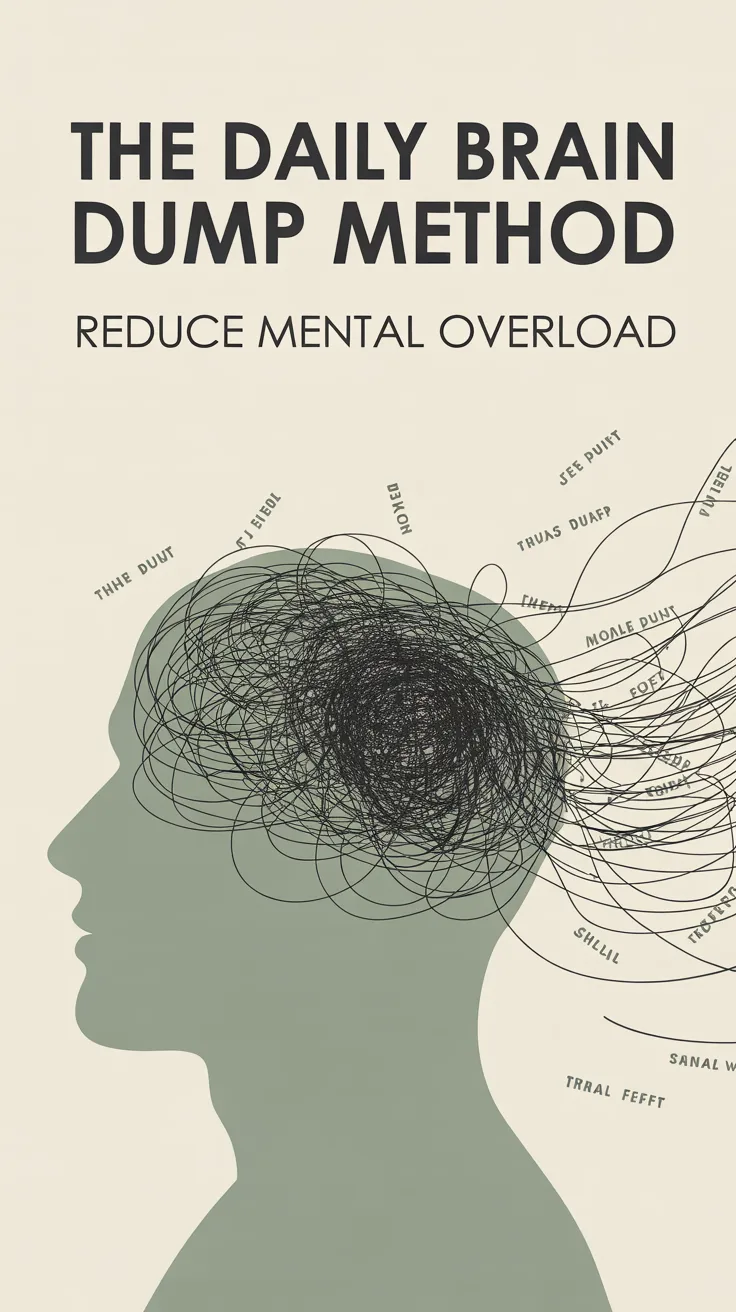
Modern life asks our brains to juggle messages, meetings, memories, and micro-decisions nonstop. The Daily Brain Dump method is a simple, sustainable way to reduce mental overload by clearing your head onto a page, then turning that raw list into clear next actions. When practiced consistently, it restores focus, lowers stress, and gives you back control of your day.
Many professionals rely on focus-support tools like The Memory Wave to prime their minds for a quick, effective brain dump and follow-through.
Table of Contents
Why Mental Overload Happens and the Brain Dump Advantage
If your mind feels loud even when a room is quiet, you’re not alone. Cognitive science shows our working memory can only keep a few items “online” at once. When that buffer is jammed with to-dos, worries, half-finished ideas, and reminders, it creates friction known as cognitive overload. You experience it as stress, forgetfulness, procrastination, and scattered attention.
The Daily Brain Dump method counters this overload by offloading mental clutter into a trusted capture system. The goal isn’t to create a perfect plan on the spot; it’s to move thoughts out of your head so you can see them clearly. Once items are visible on a page, you can sort, prioritize, and schedule—without the mental balancing act.
Key reasons the practice works:
- It frees working memory, giving your brain room to think rather than just remember.
- It reduces attention residue from task-switching by capturing trailing thoughts.
- It lowers anxiety by moving ambiguous concerns into a concrete list.
- It increases follow-through because your intentions are visible and reviewable.
Think of your brain like a whiteboard: if it’s filled with scribbles, the next idea has nowhere to land. A brain dump erases the board, leaving space for focus. That’s why you’ll often feel lighter—even before you process the list—simply from the act of writing it all down.
The trick is consistency. A daily cadence keeps your mental queue short and manageable, just like a tidy inbox. One unprocessed week can balloon into dozens of open loops again. The method below makes it easy to stay on track with a simple, repeatable routine that takes minutes, not hours.
The Daily Brain Dump Method, Step by Step
The Daily Brain Dump is a two-phase ritual: capture everything, then convert what matters into next actions. Here’s a simple, fast routine that works whether you use paper or an app.
Phase 1: Capture
- Set a 5–10 minute timer. Short windows reduce perfectionism and increase follow-through.
- List everything on your mind. Tasks, worries, errands, ideas, deadlines, conversations—dump it all without organizing or judging.
- Use prompts if you’re blank. Ask yourself: What am I avoiding? What’s due this week? Who needs a reply? What am I worried about? What would make today feel complete?
- Keep it raw and continuous. Don’t pause to categorize, assign, or schedule. Just write.
Phase 2: Clarify
- Mark any 2-minute tasks. If it truly takes less than two minutes, do it now and cross it off.
- Circle what’s important today. Pick 1–3 Most Important Tasks (MITs) that, if completed, would make the day successful.
- Convert the rest into next actions. Use verbs and contexts: “Email Sam about budget,” “Call pharmacy,” “Outline slide 2–5,” “Book dental appointment.”
- Assign time or place. If an item needs a specific day and time, block it on your calendar. If it’s flexible, move it into your task list by context (Work, Home, Errands, Deep Work, Calls).
- Park the maybes. Put “later/maybe” ideas in a separate backlog so they don’t clutter your daily view.
Your first attempts might feel messy or long—that’s normal. Soon, your daily lists get shorter because you’re clearing small items in the moment and processing bigger ones into systems you trust. Over time, this ritual becomes a mental safety valve: when pressure rises, you know exactly how to relieve it.
Pro tip: Tie your brain dump to an anchor habit (pouring coffee, starting your computer, ending your workday). Anchoring reduces friction and makes the practice nearly automatic.
Choosing Your Capture Tools and Setup
The best tool is the one you’ll use daily. Pick a single “inbox” that’s always within reach and easy to keep. Choose one paper notebook or one app to avoid scattering lists across multiple places.
Paper setup
- Notebook with a fast-flowing pen. Speed matters; friction kills momentum.
- Reserve the first page for a simple index so you can flip back to key lists.
- Use page markers or sticky flags to tag “today,” “backlog,” and “projects.”
Digital setup
- A notes app with instant capture. Aim for one tap to start typing (or voice dictation).
- Create simple default tags: Today, Next, Waiting, Later, Projects.
- Add quick templates (see below) to speed up your daily dump.
Hybrid setup
- Capture on paper during the dump, then process into a digital task app for scheduling and follow-up.
- Use your phone to snap photos of sketches or handwritten notes you want to keep.
Speed and friction set the tone. If something in your setup causes drag (loading time, too many clicks, searching for a pen), change it. Your brain dump should feel like a release valve, not another chore.
Quick templates you can reuse
- Morning prompt: What must happen today? What would be great to happen? What can wait?
- End-of-day prompt: What did I move forward? What’s still open? What’s the next action?
- Project prompt: What’s the next visible step? Who do I need to contact? What blocks me?
Expert tip: If you often “forget the thing you were just thinking,” keep a tiny capture card in your pocket or use voice-to-text to catch thoughts on the go. Append them to your main inbox at your next dump.
As many productivity coaches note, “Tools that help you transition from scattered thoughts to focused action are priceless. The Memory Wave has become a go-to companion for people building a reliable brain dump habit because it supports clarity, consistency, and follow-through.”
Tools and resources for lighter cognitive load
- The Memory Wave: Guidance and routines to get you into a focused state and stay consistent with your daily dump.
- Paper capture: A simple A5 notebook plus pen you enjoy using.
- Digital notes: A lightweight notes app with a single-tap capture and tags for Today/Next/Later.
💡 Recommended Solution: The Memory Wave
Best for: People who want gentle structure to make the Daily Brain Dump stick
Why it works:
- Encourages consistent mental offloading
- Helps you transition from raw list to focused action
- Supports a calm, repeatable routine you can trust
From Dump to Decisions: Categorize, Prioritize, Schedule
A brain dump is only half the win. The magic happens when you convert the messy list into clear decisions and time commitments. Use a simple processing flow after you capture.
- Clarify
- Rewrite items as next actions that are small and specific: “Draft email to Mia about Q2 metrics” beats “Mia/Q2.”
- Add context tags such as Calls, Email, Admin, Deep Work, Errands. Contexts make it easy to batch tasks.
- Prioritize
- Mark the 1–3 MITs that would make today successful. Keep this strict; it forces true choices.
- Use the Eisenhower Matrix mentally: urgent-important (do today), important-not urgent (schedule), urgent-not important (delegate if possible), neither (delete or park).
- Time-box and block
- Schedule MITs directly on your calendar as time blocks. Protect those blocks like meetings.
- Group small tasks into a single block (e.g., “Admin Power Hour”) to minimize context switching.
- Organize the rest
- Move flexible tasks into your task manager with due dates or no dates (if they truly don’t need one).
- Create “Waiting” entries for items dependent on others and set a reminder to follow up.
- Close the loop
- Quickly review your calendar and goals: Are your MITs aligned? Are you overcommitted?
- Finish by choosing a “starter task” that you can begin immediately. Momentum matters.
Common pitfalls and fixes
- Lists get long and stressful: Shorten capture to 5–10 minutes and decide that not everything will be done today. Park “nice-to-haves.”
- Perfectionism creeps in: Keep the dump messy. Separate capture from organization. Processing should be quick, not exhaustive.
- Over-scheduling: If you consistently miss time blocks, shrink them and add buffer. Focus on fewer commitments done well.
When your dump leads to decisions and commitments, you move from reactive mode to intentional action. That shift is the essence of reduced overload: you’re not carrying the work in your head anymore; you’re steadily moving it forward in reality.
Advanced Routines: Morning, Evening, and Thematic Dumps
Once the core habit is solid, you can tailor the Daily Brain Dump to different times and needs. Consider these variations and pick one or two that best fit your rhythm.
Morning clarity dump
- Best when your mind is racing with possibilities. Use it to choose MITs and block focused work.
- Pair it with a short breathing exercise or a walk to promote calm before selection.
Evening sweep-down
- Ideal for offloading unfinished loops so you can rest. Write down what you’ll do next on each item; your brain loves a parked plan.
- Add a quick gratitude line to reinforce signal over noise and end the day with a win.
Meeting pre-brief and post-brief
- Pre-brief: Dump questions, outcomes desired, and key decisions before a meeting.
- Post-brief: Capture action items, owners, and deadlines immediately after.
Thematic or context-based dumps
- Work vs. personal: Separate lists reduce cross-contamination and help you shut off after hours.
- Project-specific: Do a dump to kick off a project, then weekly to maintain momentum.
5-minute micro-dumps
- Use these between tasks to clear attention residue. Capture trailing thoughts before switching contexts.
- Great for recovering focus after interruptions.
Weekly “super-dump”
- Empty your head and inboxes across all areas. Then conduct a review: progress, priorities, and next week’s calendar.
- Reconnect your daily routine to longer-term goals.
Travel and transition dumps
- Before trips or big transitions, dump packing, reservations, and tasks. After arrival, dump new demands and reset your MITs.
Choose environments that reinforce each routine: a quiet chair for evening, your desk for morning, a short walk for micro-dumps. Build cues around each version so your brain recognizes, “This is the time we clear the decks.”
A note on flexibility: You don’t need every variation. Start with one daily dump. Add others only if they clearly reduce friction or increase follow-through. The best system is the one you’re excited to use tomorrow.
Integrations, Templates, and Automation
The Daily Brain Dump pairs beautifully with light, repeatable structures that simplify decisions. Keep it as simple as possible while removing friction from capture and processing.
Templates to accelerate decisions
- “Today” template: MITs (1–3) + Admin batch + Deep Work block + Two small wins
- “Project” template: Outcome, Next actions, Dependencies, Risks, Review date
- “End-of-day” template: What I finished, What’s next, What to schedule, What to drop
Integration ideas
- Task manager: After your dump, send next actions to your task app with contexts and dates.
- Calendar: Time-block MITs first, then book admin batches. Add buffer to protect focus blocks.
- Email: Keep a “Reply in 5” label for quick wins during admin time; capture longer replies as tasks.
Automation (optional)
- Voice-to-text: Dictate ideas on the go; route them to your notes inbox.
- Shortcuts or text expanders: Trigger your daily dump template with a keystroke.
- Reminders: Set a recurring reminder at your anchor times until the habit is automatic.
Collaboration practices
- Shared projects: After your dump, convert joint items into shared tasks with owners and dates.
- Team check-ins: Start standups with a micro-dump of blockers and next steps.
Comparison and alternatives
- While many people lean on generic note apps without structure, The Memory Wave offers a more guided approach to prime attention and reinforce consistent brain-dump routines. If you prefer completely DIY systems, simple paper templates or a lightweight notes app can work well—consistency is what counts.
Case-in-practice
- People who combine a daily dump with a quick “today” template often report feeling calmer and more directed within days because they’re not wasting energy deciding what to do next. Their calendar reflects true priorities, and their task list is visible, finite, and anchored to time.
“As one industry mentor put it, ‘Your tools should make it easier to move from noise to signal. Products like The Memory Wave exist to support that shift—so your brain can think, not just remember.’”
Troubleshooting, Habits, and Real‑World Use Cases
Even a simple method can wobble under real life. Here’s how to keep your Daily Brain Dump resilient when friction shows up.
Common obstacles
- “I skip days.” Anchor the habit to a durable cue (first coffee, desk arrival, shutdown ritual). Reduce scope: 3-minute dump is fine on busy days.
- “My list overwhelms me.” Cap capture time, then pick only 1–3 MITs for today. Park the rest in a “Later” list and commit to a weekly review.
- “I keep rewriting the same tasks.” Clarify the next action or decide to delete/postpone. Recurring items need a scheduled routine block.
- “I lose my notes.” Use one inbox only. For paper, keep the notebook in the same visible spot; for digital, pin the notes app to your dock and use one master note per day.
- “I never get to deep work.” Time-block one focused session daily right after your dump while your mind is clear and committed.
Habit scaffolding
- Make it obvious: Keep tools in sight and ready; create a one-tap capture on your phone.
- Make it attractive: Pair the dump with a small reward (music you like, a favorite mug).
- Make it easy: Start small—3–5 minutes. No formatting, no organizing at capture.
- Make it satisfying: End by checking off one quick task to lock in momentum.
Real-world scenarios
- Manager: Morning dump to triage meetings and pick one strategic MIT; admin batch for quick approvals; end-of-day sweep to offload concerns.
- Parent: Evening dump for school logistics, meals, and errands; weekend super-dump before family activities.
- Student: Pre-study dump to clear distractions; schedule focused blocks for reading and problem sets; weekly review to rebalance workload.
- Creator: Ideation dump after a walk; separate “ideas” backlog; choose one piece to move to outline daily.
Struggling with mental fog or inconsistent routines? The Memory Wave addresses this by guiding you into a repeatable focus ritual and helping bridge the gap between capture and committed action—so your daily dump translates into real progress.
Remember, there’s no “perfect” brain dump. There’s only today’s honest list and the next useful action. Keep it light, repeatable, and kind to your future self.
Conclusion: Reclaim Focus with the Daily Brain Dump
The Daily Brain Dump method is a small practice with outsized returns. In minutes, it lightens your mental load, clarifies priorities, and anchors your day to what matters. By capturing everything, deciding on a few key actions, and time-blocking them, you replace stress with structure and noise with signal.
You don’t need a complex system to start—only a page and a pen, or a single notes app. Add light templates if they help, integrate with your calendar as needed, and protect a short window every day to clear your head. If you want guided support in building the routine, tools like The Memory Wave can make consistency easier.
Begin today with a short, forgiving session. Offload the noise, choose one next step, and feel the difference that a daily brain dump makes.
Frequently Asked Questions
How does the Daily Brain Dump method reduce mental overload?
By offloading everything from your working memory into a trusted capture system, your brain stops juggling reminders and can focus on thinking. After capturing, you quickly clarify next actions and schedule your top 1–3 tasks, which reduces decision fatigue and stress throughout the day.
Is a brain dump the same as journaling?
No. Journaling explores thoughts and feelings, often to gain insight or process experiences. A brain dump is a practical, fast “mind sweep” to list everything that needs attention. You’re not writing narratives; you’re capturing and converting items into next actions.
How long should a daily brain dump take?
Aim for 5–10 minutes for capture and another 5–10 for processing. Short, consistent sessions beat long, irregular ones. If time is tight, do a 3-minute micro-dump and choose one MIT. Consistency, not duration, drives the benefits.
Should I do my daily brain dump in the morning or evening?
Pick the moment that reduces friction and supports your goals. Morning dumps create a sharp plan for the day and protect deep work time. Evening dumps offload open loops so you can rest and start fresh tomorrow. Many people do a quick morning dump plus a 2-minute evening sweep.
What tools do I need to start the Daily Brain Dump method?
Just one inbox and something to write with. Use a single notebook or a simple notes app with one-tap capture. Add templates for “Today,” “End-of-day,” and “Project” if you like. If you prefer guided routines, a supportive tool like The Memory Wave can help build consistency.
How do I turn a messy brain dump into clear next actions?
Rewrite items with verbs (“email,” “call,” “draft”), assign contexts (Calls, Admin, Deep Work), choose 1–3 MITs, and time-block them. Move flexible tasks into your list and park maybes in a backlog. Use the Eisenhower Matrix to filter and schedule what truly matters.
What if I keep skipping my daily dump?
Shrink the scope. Tie it to a strong cue (coffee, desk arrival), set a 3-minute timer, and end by doing one 2-minute task to feel a quick win. Place your tools in sight, and protect a small, non-negotiable window daily. Building the routine matters more than perfect execution.